
Collagen After 40: Working With Time Instead of Against It

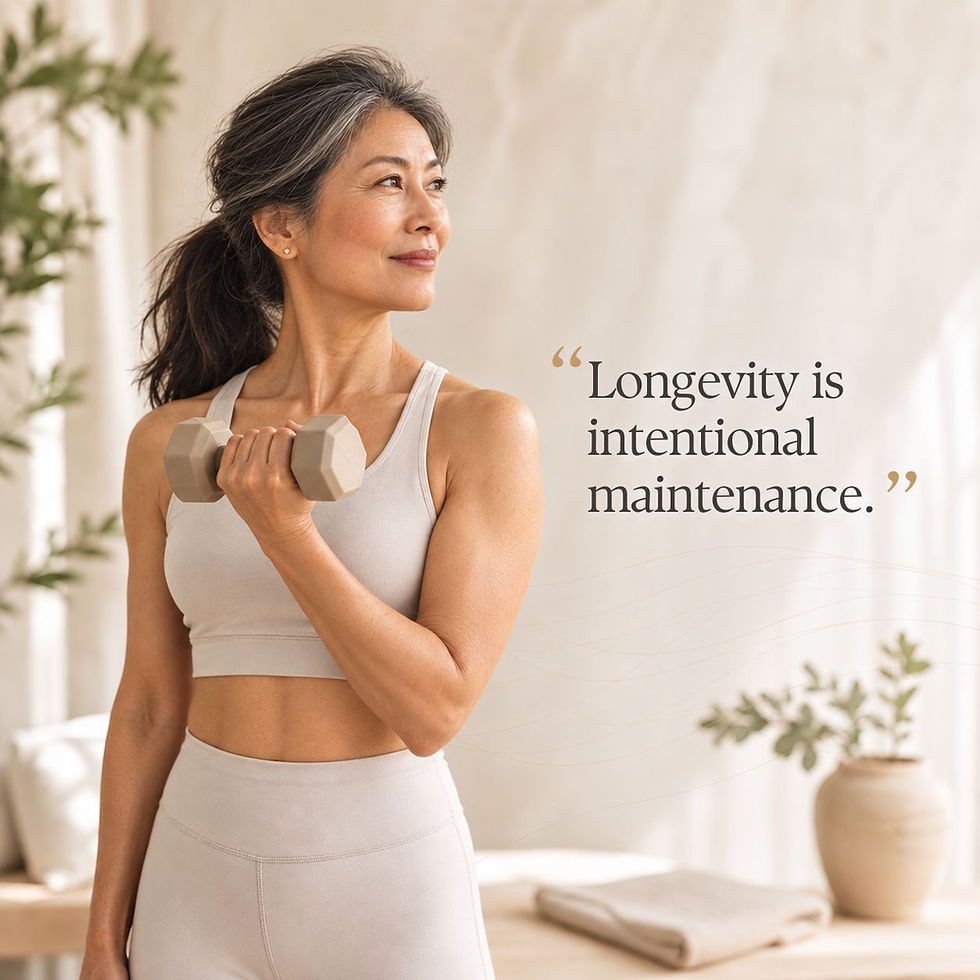
Healthy aging is rarely the result of one treatment, one product or one perfect habit.
It is shaped by the small choices we repeat: how we nourish the body, how much water we drink, how often we move, how deeply we rest and how well we care for our emotional health.
Five Foundations of Wellness
These five foundations work together:
1. Balanced food consumption | 2. Water consumption | 3. Body movement | 4. Body rest | 5. Emotional balance |
Each one influences how the body repairs, adapts and carries us through time. They also influence the skin. This month, we are looking more closely at collagen and what begins to change after 40. The goal is not to fight time. It is to understand what the body needs as time moves forward.
Collagen Does Not Disappear Overnight
Collagen is one of the main structural proteins in the skin. It helps provide firmness, strength and support. Its decline is not sudden. Collagen production begins to slow gradually in early adulthood, while the collagen already present in the skin becomes more vulnerable to damage. Over time, this may appear as fine lines, thinner skin, reduced elasticity or changes in facial structure.
For women, hormonal changes during menopause can make this shift more noticeable. Research suggests that skin collagen loss can accelerate during the early menopausal years.
This is not a failure of the body. It is part of its natural biology.
Understanding that process allows us to move away from urgency and toward thoughtful maintenance.
What Can Accelerate Collagen Loss?
Age is only one part of the story. Repeated sun exposure is one of the most significant external contributors to collagen breakdown. Smoking, chronic stress, inadequate nutrition and inconsistent sleep can also affect the environment in which the skin repairs itself.
This is where the five foundations of wellness become important.
A varied diet provides the protein, vitamins and minerals the body uses in normal tissue repair. Water supports overall hydration, although drinking more water alone cannot replace lost collagen. Regular movement supports circulation and whole-body health. Emotional balance helps reduce the strain of living in a constant state of stress.
Then there is rest.
Sleep is not simply time when the body is inactive. It is part of the body’s recovery rhythm. When rest is repeatedly interrupted or shortened, the body has less opportunity to complete the restorative work that supports healthy skin and overall well-being.
Rest will not stop collagen loss. It does, however, help create conditions that support repair, resilience and better long-term choices.
PRF and Regenerative Support
Lifestyle creates the foundation, but professional treatments may provide additional support when the skin begins to change. Platelet-rich fibrin, commonly known as PRF, is prepared from a small sample of a person’s own blood. It contains platelets and natural signalling proteins within a fibrin matrix. In aesthetic care, PRF may be used to support the skin’s natural regenerative response. Check out our treatment options
PRF is not a replacement for collagen, and it does not freeze the aging process. Its purpose is to work with the body rather than simply disguise change. Because every person’s skin, health history and goals are different, treatment should begin with a professional assessment. Results also develop gradually, and more than one treatment may be recommended as part of a longer-term plan.
Regenerative care is most effective when expectations are realistic and the surrounding foundations of health are also being supported.
Strength Training Is Part of the Collagen Conversation
Collagen is not found only in the face. It is also an important part of bones, tendons, ligaments and other connective tissues. This makes strength training relevant to a much broader conversation about aging well.
Resistance exercise helps preserve muscle strength, mobility and physical independence as we age. It also places a controlled demand on muscles and connective tissues, giving the body a reason to adapt.
The goal does not need to be extreme exercise. Consistency matters more than intensity for many people. Appropriate resistance training, followed by adequate nutrition and recovery, can become a practical form of long-term maintenance. Rest belongs here, too. The body needs both stimulus and recovery. Movement creates the invitation to adapt, while rest gives the body time to respond.
A Long-Term Maintenance Mindset
We are often encouraged to approach aging as something that must be corrected quickly.
But collagen responds to time, lifestyle, environment and biology. There is no single solution that replaces everything the body gradually loses.
A more realistic approach combines daily protection, balanced nutrition, movement, restorative sleep, emotional care and well-selected professional treatments. It also recognizes that needs will change over time.
Healthy aging is not about chasing the face you had at 25. It is about caring for the face and body you have now, while protecting their strength and vitality for the years ahead.
“Longevity is maintenance with intention.” |
Frequently Asked Questions About Collagen After 40
What happens to collagen after 40?
Collagen production gradually slows with age, while existing collagen becomes more vulnerable to breakdown. This may contribute to thinner skin, fine lines, reduced elasticity and changes in facial structure. Hormonal changes during menopause can make these changes more noticeable.
Can lost collagen be restored?
No treatment or lifestyle habit can completely restore collagen to an earlier age. However, sun protection, balanced nutrition, strength training, restorative sleep and appropriate professional treatments may help support the skin and its natural regenerative processes.
Does drinking water increase collagen?
Water does not directly increase collagen production. Adequate hydration supports normal body function and can help the skin appear and feel less dry, but it cannot replace collagen that has been lost.
How does sleep affect collagen and skin health?
Sleep supports the body’s normal recovery processes. Poor or inconsistent sleep can interfere with overall skin health and may contribute to visible signs of fatigue and stress. Rest works best as one part of a broader healthy-aging routine.
How may PRF support aging skin?
Platelet-rich fibrin, or PRF, is prepared from a person’s own blood and contains platelets and natural signalling proteins within a fibrin matrix. It may support the skin’s natural regenerative response. Suitability and expected results should be discussed during a professional consultation.
Does strength training support collagen?
Strength training places a controlled demand on muscles, bones and connective tissues. When combined with adequate nutrition and recovery, it can help preserve strength, mobility, and physical function as the body ages.
Whole-Person Care at Elite Wellness MediSpa
At Elite Wellness MediSpa, we believe the best results come from understanding the whole person. Skin does not exist in isolation from stress, sleep, nutrition, movement, or emotional health. Each part contributes to how we age and how we feel.
Collagen may decline gradually, but our ability to care for ourselves can deepen with time.
Jo’s Quote of the Month: Longevity is maintenance with intention.

Comments